
This article reflects information as of 2020. For the latest details, please contact us.
Written by: Tomohiro Koizumi, Representative Director, tentus inc.
At tentus, we don't place much emphasis on experience when hiring.
Because of that, developing a method for training inexperienced members into directors was a very important challenge for us.
Right off the bat this strays from today's title of "training system," but — what do you think is the most important thing for a director?
Documentation skills? Progress-management skills? An understanding of systems?
I think these are skills you can always reach a certain level in by building up experience through projects, so while they're necessary for a director, I don't consider them the most important.
What I think a director needs most is imagination.
Imagining the user's psychology. Imagining the client's position. Imagining the reputation of the client's company.
Without the right input, imagination is no different from delusion. You draw on all sorts of information input, imagine all sorts of scenarios, and then consider the appropriate means for each. This doesn't grow just from sitting at a desk. Engaging with people, treating all kinds of information as your own concern, taking it in, thinking about it, and making it part of you — that becomes the starting point for imagination.
So I believe that anyone who can genuinely be considerate of others and has a joyfulness that isn't self-centered can become an excellent director.
We manage the training system that grows such wonderful people into directors with a project management tool like this — Backlog.
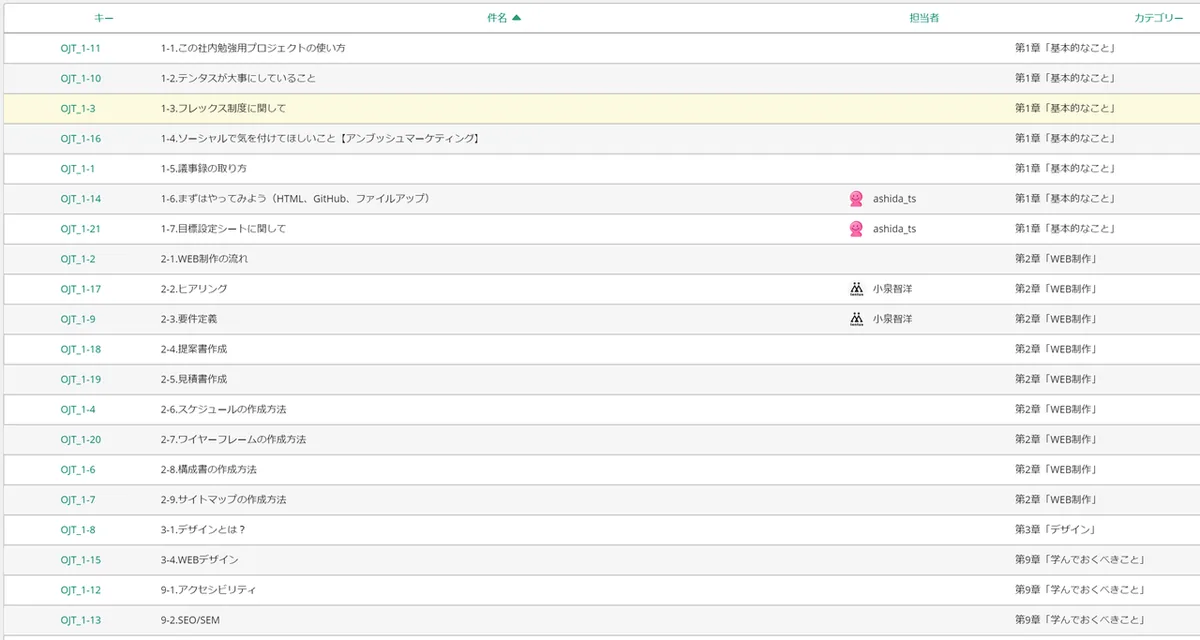
New members study based on this, but the important things here are:
- The one who teaches is a senior member
- The new member who was taught maintains each item themselves
These two points.
Using this tool, the senior who most recently received the training becomes the teacher, and the new member — the student — takes charge of organizing the information.
It's a kind of apprenticeship system, if you will: by becoming teachers, seniors gain fresh insights, and by having new members handle the upkeep of the information, it becomes possible to review what was taught and to check the person's own level of understanding.
Honestly, none of the individual content is anything special. It's all stuff you can find plenty of with a quick Google search.
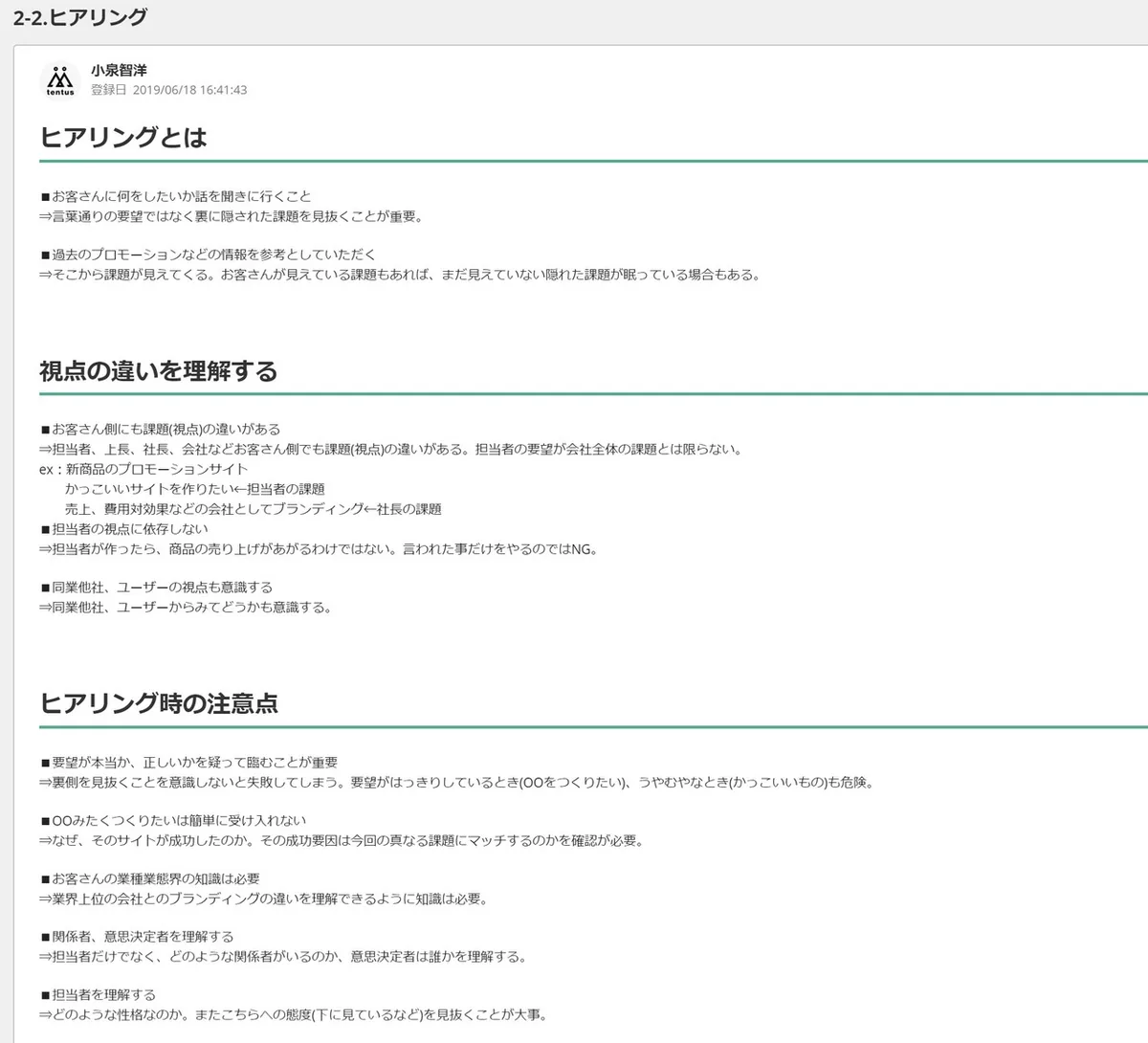
The most important thing about this training system is having a shared place where knowledge can accumulate.
With this shared place, everyone can standardize the terminology they use, refer to documents, and find the person who can answer questions in detail.
There's still a lot that needs organizing, but I'd like to keep this training system going from here on.