
This article reflects information as of 2020. For the latest details, please contact us.
Written by: Tomohiro Koizumi, Representative Director, tentus inc.

1994: Pioneer DJ CDJ-50 Released
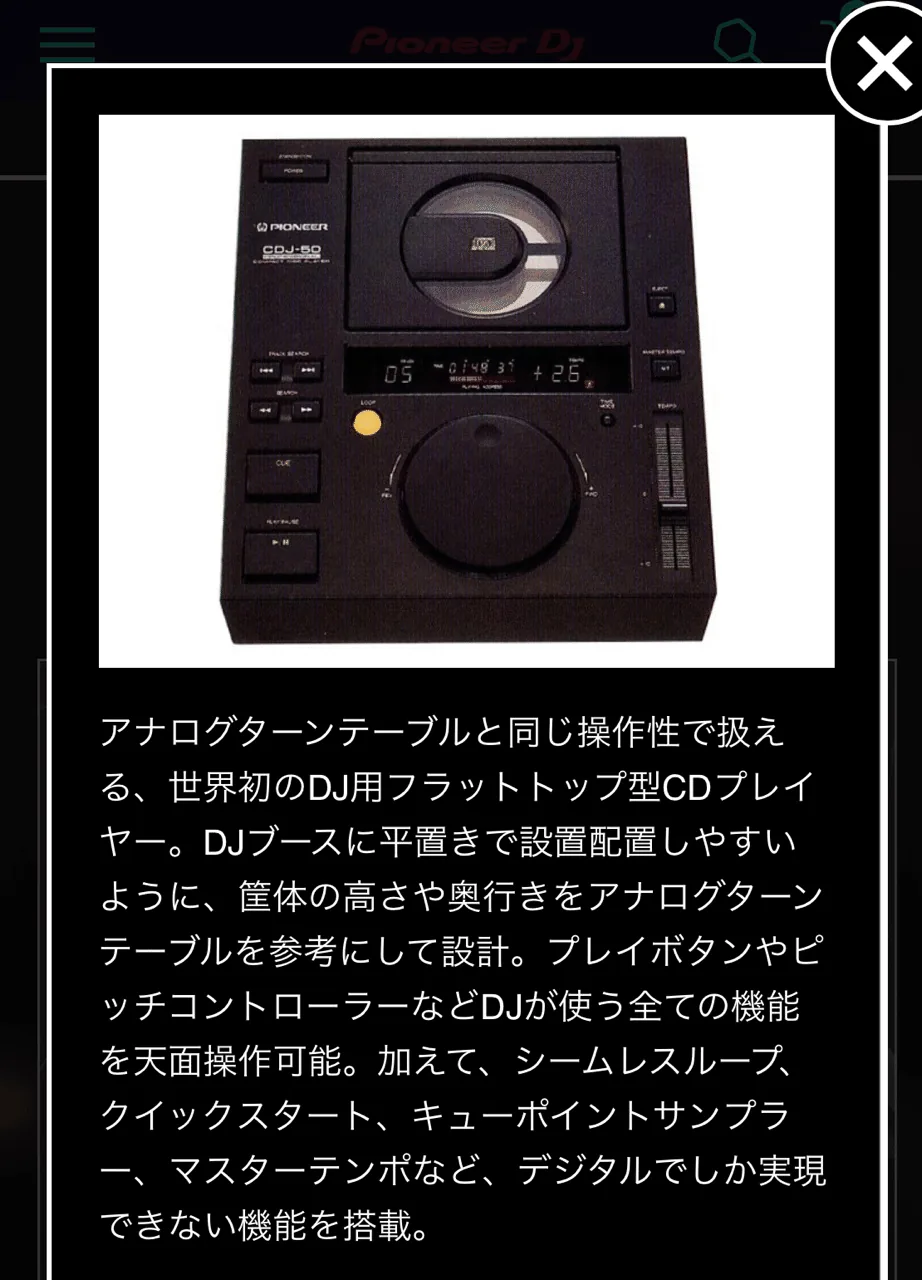
It was 1994 when Pioneer Corporation released the CDJ-50, the world's first flat-top CD player for DJs that could be handled with the same operability as an analog turntable.
It's the same year Shinjuku Liquidroom opened — ah, nostalgic.
Twenty-five years on, even I — who'd sworn never to say "I haven't been to the clubs lately" — have reached the age where I do, after all, end up saying "I haven't been to the clubs lately."
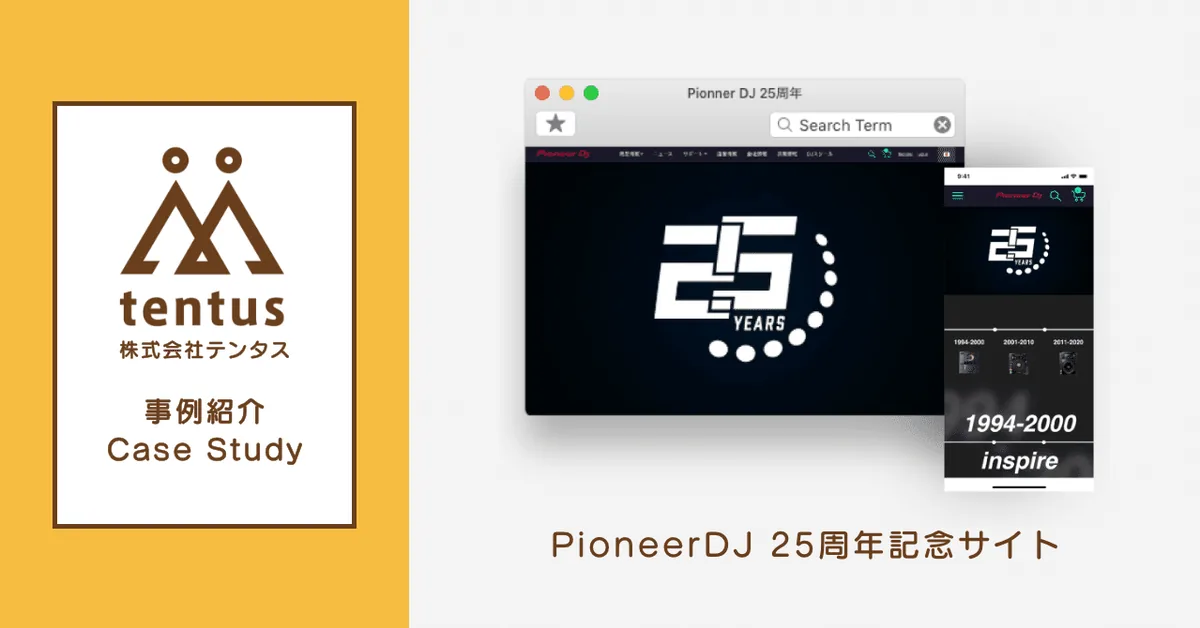
The Pioneer DJ 25th Anniversary Site
Amid all that, I remember getting a little excited when Pioneer DJ (AlphaTheta Corporation) asked us to do their 25th-anniversary site.
At clubs I specialized in getting drunk, so I hadn't really stood inside the booth much, but there was one photo of me spinning on my phone. (I'm now 20 kg heavier than that — so young!)

The requests from Pioneer DJ, to whom I owe so much both professionally and personally, were:
- Being able to grasp the 25-year history at a glance → they wanted to show all sorts of information: the history of the CDJ, interviews with DJs from the time, and more
- Being easy to update on the client side → because information gets updated, such as new products coming out along the way
Of course I had a strong urge to handle it myself, but figuring that a young person's sensibility matters more than an old man butting in, this time I asked a young director to take it on.
Production Progress
First, to improve at-a-glance viewability, we proposed a layout fitting all 25 years of equipment onto a single page; next was the design.
We came up with a lovely design together with Pioneer DJ's designer, but since they're a globally operating company, design requests and revisions came not only from the Japanese team but from all sorts of places — the US, Europe, and more — and it seems they had a hard time pulling it all together.
There was a lot of technical terminology around the equipment, and translation was apparently a struggle too, but in the end we ended up asking the client side to proofread it.
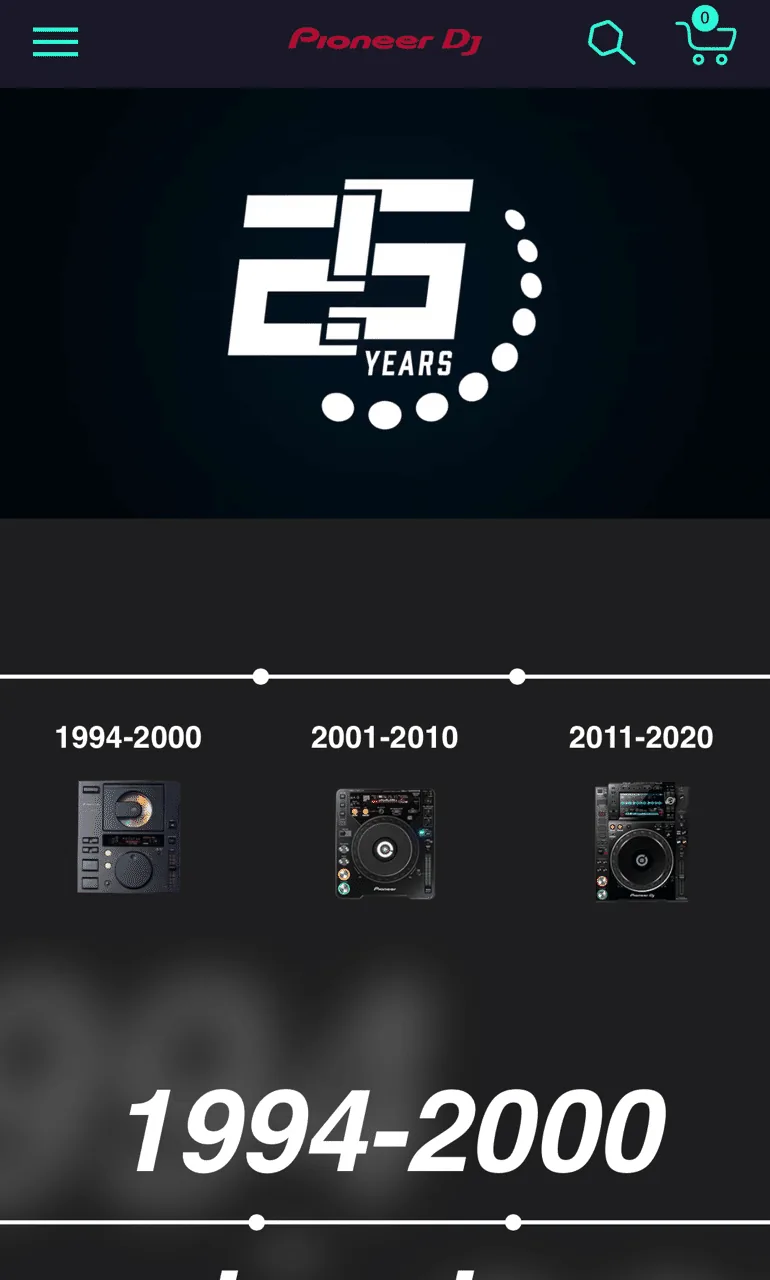
For the page layout, to reconcile at-a-glance viewability with design quality, we made it a parallax where information moves interactively as you scroll the page — but the problem was that, due to its structure, parallax makes post-launch revisions difficult.
By templating part of it and coding it so that updates would be easy, we made ongoing operation possible on the client side too.
With this, we were able to make a site that prioritized both design quality and maintainability.
Wishing them many more journeys alongside all kinds of music scenes!
Looking forward to working together, professionally and personally!