
This article reflects information as of 2020. For the latest details, please contact us.

Written by: Ashida, tentus inc.
Hello!
Thank you for reading the article! My previous article was seen by many people too — I'm both happy and a little embarrassed… I'll do my best so this one gets read by lots of people as well!!
This time's theme is "DX"! Like the previous "SDGs," it's a word you hear or see a lot lately! I visited Tsutaya Books again and looked into it! When you search for books on "DX," you get game strategy guides and even risqué books — it seems to get pulled toward "deluxe." That was embarrassing… This time I'll be writing based on information from "Mirai IT Zukai: Korekara no DX — Digital Transformation" (Publisher: MdN Corporation).
1. What Is "DX"?
"DX" is short for "Digital transformation." It's a concept proposed in 2004 by the Swedish scholar Erik Stolterman. According to Japan's Ministry of Economy, Trade and Industry (METI) "DX Promotion Guidelines," it is described as: "Companies responding to the fierce changes in the business environment, using data and digital technology, and — based on the needs of customers and society — transforming products, services, and business models, while also transforming operations themselves, organizations, processes, and corporate culture/climate, to secure a competitive advantage."
https://www.meti.go.jp/policy/it_policy/dx/dx.html
You could say it's a very broad concept that greatly transforms things. Put simply, it means let's convert everything into digital! DX consists of two elements: practice and environment-building. Practice refers to the digitization of specific services and businesses; environment-building refers to the digitization of the internal company environment.
2. The Background to DX Promotion
Behind the promotion of DX is, of course, the spread of smartphones and the advancement of technology — but the appearance of "disruptors" is also said to be a factor. This refers to companies and services that use digital technology for new businesses that disrupt existing markets.

To give concrete examples, the disruptor of department stores and shopping malls is "Amazon."

Sharing-economy players like the taxi-hailing "Uber" and the home-sharing intermediary "Airbnb" are disruptors of the taxi and hotel industries.

3. Examples of Practice Patterns
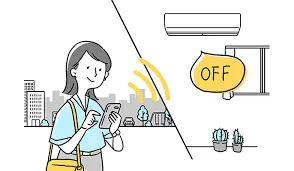
Practice patterns can be divided into those focused on "data" and those focused on "connections." Examples of data-focused DX practice patterns include remote air-conditioner control, online coupons and electronic money, and three-dimensional crash testing.
For connection-focused practice patterns, examples include the sharing economy and matching economy mentioned earlier, and the business-card management service ALI, and more!

4. Summary
DX isn't something that's finished once you introduce it. As the business environment constantly changes and technology keeps advancing, it's thought that you need to keep updating constantly in order to secure a competitive advantage in the market. There is no end to DX!
5. An Aside
This is from the other day, when I was listening to my mother complain about work. My mother does clerical work at a subsidiary of a certain large company, and apparently the parent company decided to introduce the system it uses so that paper-based exchanges and approvals could be done digitally. But in the system explanation held over Zoom connecting the various branch offices, it seems the people in charge at each one couldn't understand the parent company's explanation. I felt this was surely a problem that arose because the person in charge on the parent-company side didn't have a deep understanding of the system or a grasp of each branch's digital environment. A failed example of DX. I felt that unless the environment-building side also organizes information and creates dedicated departments and the like, big companies have a hard time. Reading the book, I — Ashida — felt that it'll take time for DX to be promoted in Japan.