
This article reflects information as of 2020. For the latest details, please contact us.
Buzzword Explainer
Buzzwords Explained: Go Direct with D2C
2020.10.26
Written by:
Hello! Thank you for reading again this time! Do you do online shopping? For clothes, I buy almost exclusively at "ZOZOTOWN." I have a connection from having worked there part-time long ago, so I use it. Since there can be sizing mistakes, I go to the store once to see something, and then buy the one I like on ZOZO. But for manufacturers, considering the intermediary fees and such, they'd want you to buy directly, right? Amid all this, something I've been hearing over the past few years is "D2C." This time I'll write about D2C!
1. What is D2C?
D2C is short for "Direct to Consumer." It refers to a mechanism for selling products directly to customers/consumers. It's selling what you've made yourself, as-is, through your own channels such as your own EC site! In recent years we see cases of selling directly without going through retail stores or EC malls. Apparel and beauty companies in particular are rolling this out! The words "BtoB" and "BtoC" are similar, but what they represent is different. The former two are words that describe the form of who transacts with whom and where. D2C, by contrast, is a word that describes how you transact and how you deliver.
2. Merits and demerits
Merits The first merit that comes to mind is cost, of course! No intermediary fees, commissions, or other overhead arise. For example, with Amazon there's a monthly registration fee of 4,900 yen plus 8–15% of purchased products charged as commission. With Rakuten too, there are initial and monthly store-opening fees, system commissions, affiliate commissions, and other fees — cost-wise it's tough, isn't it? If you do it yourself, it's only the payment-system commission, so it's cost-effective! Being able to run campaigns and sales easily is another merit. With retail stores and EC malls there are constraints and such, making it hard to do things solely on your own. Being able to do that at your own preferred timing is a real merit! Being close to your customers is also a merit. Since you can hear customers' voices more, you can have two-way communication, which makes it easier to turn them into fans/repeat customers!
Demerits A demerit that comes to mind is that the initial build is hard. For companies without web knowledge, cost arises as an outsourcing expense, and even when building in-house, you need to secure resources, so for small companies it may be tough. Also, for companies with low awareness, there's a chance you won't even show up in search. In that case, you need to use SNS and the like skillfully!
3. Examples
RiLi A brand that draws support from fashionable young women. It's a business style where it delivers content that resonates through its user-participatory owned media "RiLi Tokyo," and sells products matching that content at "RiLi Store." The basic flow is to create content in order to drive traffic to your own EC, but RiLi has a slightly unusual flow in that its main business is media and the shop was a later offshoot. It's a shop born from engaging with users through media operation and hearing their voices!

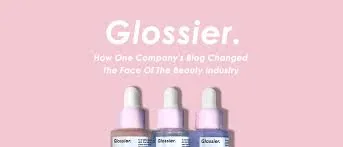
Glossier A cosmetics brand out of New York. Founder Emily Weiss, drawing on her experience as a styling assistant for a fashion magazine, ran a fashion blog from 2010, which grew into a popular blog visited by 1.4 million people a month. Around 2014, blog users began visiting the service site as well, and the shop's sales rose too.
4. In closing
As the examples showed, you can see that awareness is, after all, key to success. How you use media, SNS, and so on seems to become important. At tentus, we support everything from building EC sites to driving traffic, so please do get in touch — even just for a consultation!
Thank you for reading!