
This article reflects information as of 2020. For the latest details, please contact us.
Buzzword Explainer
Buzzwords Explained: Get the Basics of MaaS and You Can Kind of Talk About It
2020.11.09
This article reflects information as of 2020. For the latest details, please contact us.
Written by:

Hello! Thank you for reading this time too. Last week the article's posting day was different from usual, so this time there was only a one-day gap, and I'm quite panicked… Truly, the manga artists who serialize in weekly magazines without ever taking a break are amazing… Come back, Togashi. This time I'll write about "MaaS"! What's your main means of getting around? As we become adults, even for nearby distances we end up driving a car or taking a taxi… lack of exercise…
1. What is "MaaS"?
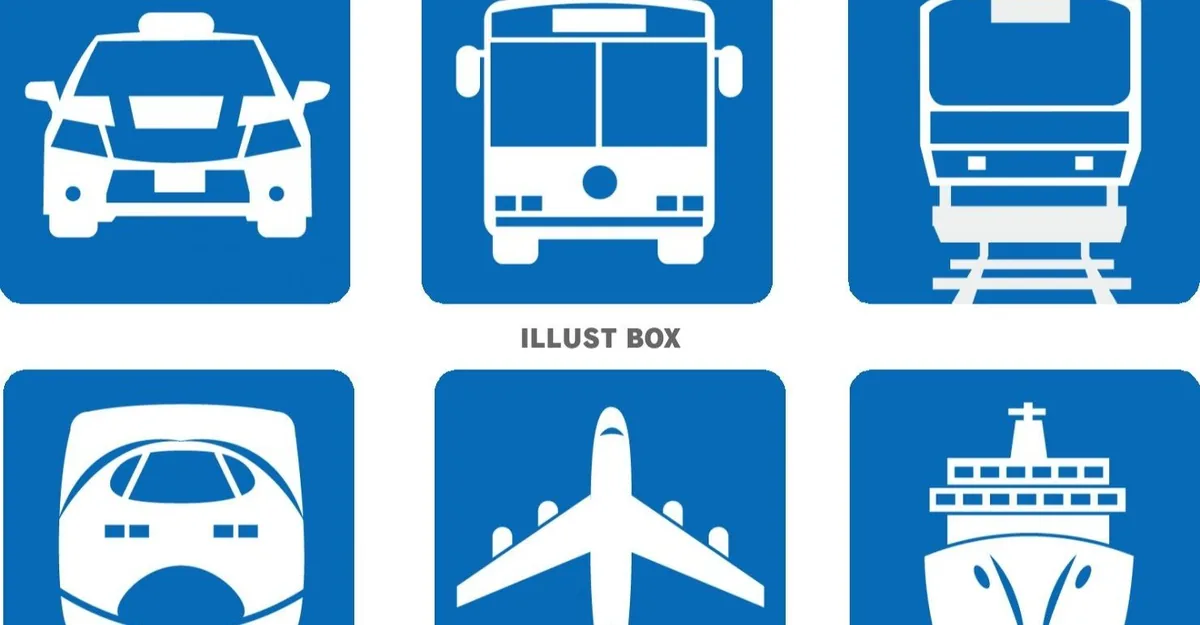
MaaS is short for "Mobility as a Service," and translated literally it's "mobility as a service," meaning the turning of movement into a service. It was probably born under the influence of "IaaS (Infrastructure as a Service)" and "SaaS (Software as a Service)" used in the IT industry… It's a concept that integrates all movement by every means of transport — bus, train, taxi, plane, and so on — into a single service, seamlessly connecting everything from route search to payment. The "MaaS Alliance," an organization formed at the ITS World Congress held in Bordeaux, France, in 2015, defines it as follows:
"A single mobility service, accessible on demand, that integrates various forms of transport services; and the MaaS operator provides a menu of various means of transport — public transport, ride-sharing, car-sharing, taxis, rental cars, and so on — to meet users' requests."
In short, "let's use ICT to seamlessly connect movement other than by private car!" If you introduce a MaaS system, you can bundle into and complete within a single platform the steps of searching for a route to where you want to go, reserving tickets for each mode of transport, making payments, and so on! In recent years, as an advanced development, importance is also placed on connecting it with industries beyond transport — tourism, dining, healthcare, real estate, and so on — to create added value. Realizing MaaS requires, as a major premise, a cooperative structure among the transport operators, and data linkage becomes important. It's necessary to make open and link large-scale data such as operational information for trains and buses, taxi location information, and traffic information on where roads are congested. You can already tell it looks like a lot of work… On top of that, there are related-field data such as regional information, and personal data such as users' behavioral and payment history — and a vast amount of accompanying data must be handled. Various rules need to be set, including how to divide data into cooperative and competitive domains and methods of data linkage. The PM on this project has it rough. Regarding data linkage, the MaaS-Related Data Study Group established by the Ministry of Land, Infrastructure, Transport and Tourism announced "Guidelines on the Linkage of MaaS-Related Data Ver.1.0" in March 2020, indicating a direction for data linkage.
https://www.mlit.go.jp/report/press/sogo12_hh_000181.html
2. Merits of MaaS
By integrating every kind of "movement" into a single service, we can imagine it greatly raising users' convenience. Beyond that, various other merits can be considered:
・Reducing urban traffic congestion With higher convenience, more people use public transport, and as private-car travel decreases, congestion is expected to decrease. ・Reducing parking-lot area, allowing conversion to green space and more Here too, as more people use public transport, parking lots become surplus, so that space can be used effectively. It also connects to reducing CO2. ・The survival of regional transport In regions where public transport's survival is at risk due to deficits, by considering MaaS together with things like labor-saving through the introduction of autonomous driving and the introduction of AI systems that optimize routing, it becomes possible to re-establish a sustainable transport environment. ・Uniform provision of transport expenses It becomes possible for companies to provide uniform commuting allowances to employees, and grasping transport routes other than the prescribed commuting route also becomes easier, so expense reconciliation is expected to become easier for both companies and employees.

3. Implementation examples
Whim The world's first MaaS app developed is "Whim." Developed by a company in Finland, it makes every kind of movement in the capital Helsinki convenient — from public transport such as buses and trains to taxis and rental cars — letting you do everything from route search to your destination through to reservations. After the service launched, the number of people using private cars in Helsinki apparently decreased, and the utilization rate of public transport rose!
Trafi "Trafi," developed in Lithuania, integrates multiple public-transport and shared-car services into a single digital platform. It provides everything from route search based on real-time operational information to payment services. In summer 2020, a business partnership with Sumitomo Corporation was announced.
UMAJI Developed in Taiwan, "UMAJI" is a travel and transport app offering functions such as big-data analysis, smart transport, and mobile payment. In addition to the route-search-to-payment functions found in other MaaS apps, it's a service that lets you scan tickets and even get information on shops where discounts apply through point exchange. It also comes with a perk of receiving gifts during low-usage time slots on Fridays and Saturdays, contributing to easing urban congestion.
https://www.metropia.com/umaji
4. In closing
This time I wrote about MaaS. Once it starts being introduced domestically in earnest, centered on JR, it'll become incredibly convenient! But I have a feeling data linkage and such are still a way off. Also, since there are cases where getting around by private car might end up cheaper, adjusting that area looks tough too… That said, I think accidents involving elderly drivers would also decrease, so I hope it spreads! Thank you for reading this time too!