
This article reflects information as of 2021. For the latest details, please contact us.
Written by:

Hello! Updating twice a week does make finding topics a headache. So this time I'll write about a trending item that was set to launch recently. Do you know about "Core Web Vitals," which was scheduled to start in May 2021? (The start was pushed back to mid-June.) Since it affects your search-result rankings, you'll need to prepare for it.
What Are Core Web Vitals?
Core Web Vitals are a set of user-experience metrics newly proposed by Google to achieve website performance and healthy UX, distilled especially into three central metrics. The three metrics are: **- Largest Contentful Paint (LCP)
- First Input Delay (FID)
- Cumulative Layout Shift (CLS)** It's hard to guess their meaning from the terms, but what they point to is quite simple.
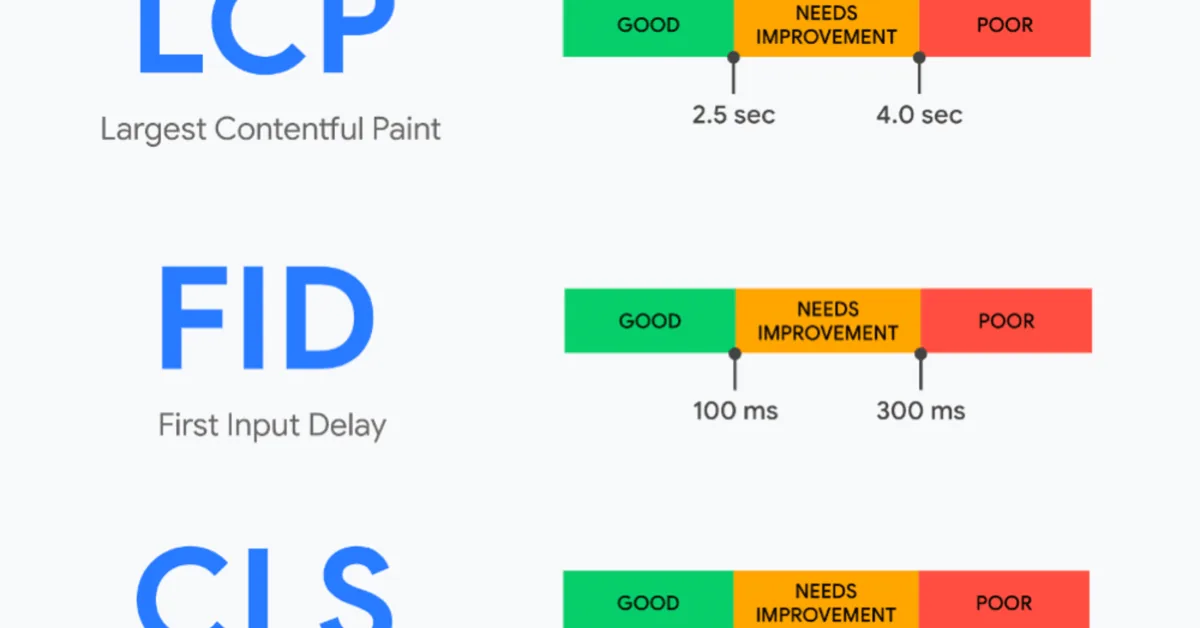
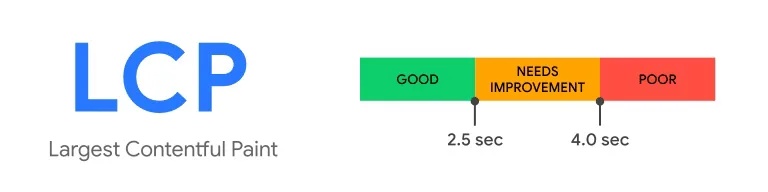
LCP This refers to the speed at which the main part of a page is displayed in the browser — the main image (including sliders and video), text paragraphs, and so on. LCP recommends "GOOD" as under 2.5 seconds for the time from opening until the target content is displayed. Points to keep in mind include the following:
**- Applies not just to PC but to smartphones (SP), too
- Measured per content unit, not until everything is displayed**
Focusing on the content that's highest-priority for users and speeding up its display may be one approach.
FID This refers to the responsiveness when the following kinds of actions happen on a page:
- Clicking or tapping a text or image link
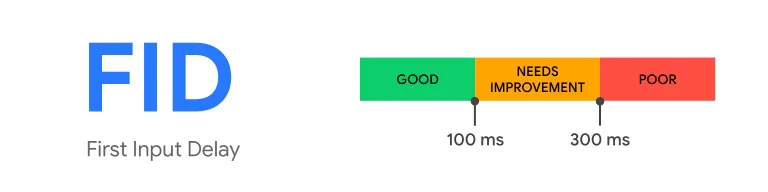
- Entering text into an inquiry form and submitting it (powered by JavaScript or PHP) ...and so on. FID recommends "GOOD" as a response speed of 100 milliseconds (0.1 seconds) or less for each action.
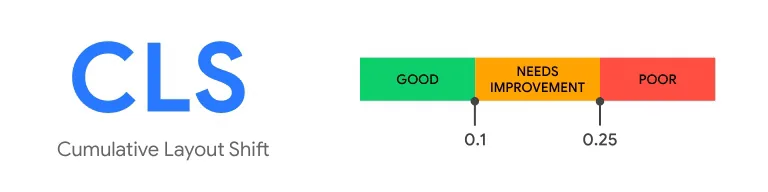
CLS Compared to the other two metrics, this one is a bit harder to grasp. When you access a page and it's still loading, images, buttons, and the like can unexpectedly shift position. If you click a button in that state, you end up clicking somewhere different from what you intended. If you make a mistake, you can just redo it — but there are cases where it leads to a loss, like clicking "Pay" instead of "Cancel." When that happens, unnecessary back-and-forth between the administrator and the user is generated. It also gives users a sense of distrust. This is a metric that evaluates sites for not letting such situations happen. CLS recommends "GOOD" as an average of under 0.1 for the amount of layout shift.
Images cited from Google Developers.
How to Measure the Metrics
Let me introduce a few tools that can measure these metrics.
Search Console
Search Console is an analytics service provided by Google for monitoring, managing, and improving your ranking in Google Search results. You register the site you want to analyze in Search Console to use it. It displays the three Core Web Vitals metrics — "LCP," "FID," and "CLS" — with a three-level rating: "Good," "Needs Improvement," and "Poor."
https://developers.google.com/speed/pagespeed/insights/
PageSpeed Insights
PageSpeed Insights is a tool provided by Google that measures a website's display speed. You access it, enter the URL of the website you want to measure into the box, and click Analyze to measure. No login or registration required. You can select either mobile or PC as the device.
https://developers.google.com/speed/pagespeed/insights/
There are also the Chrome extensions "Lighthouse" and "Web Vitals," as well as the Chrome User Experience Report and the Web Vitals Chrome Extension.
In Closing
Core Web Vitals, set to be introduced at the end of next month... UX is being emphasized even more. Google's official site suggests that when a site meets the ideal Core Web Vitals values, the user bounce rate drops by 24%. If your search results also rank higher and your bounce rate drops, then you have no choice but to be mindful of it. Thank you again for reading!