
This article reflects information as of 2020. For the latest details, please contact us.
Written by:

Hello!
Thank you for reading this article. I post one article a week, and honestly, even just that is quite a lot of work… The other staff update twice a week, so I can't hold a candle to them. Master Oda, thank you for 24 years of hard work… Master Togashi, please come back soon.
The theme I'll be writing about this time is "5G." It seems Apple is about to announce a 5G-capable iPhone before long! I think everyone has a rough sense of what 5G is. Basically, communication gets faster and more amazing — and that's about the size of it, so this article might not be all that useful. But I'll do my best, so please bear with me.
1. What is 5G?
5G stands for the "5th Generation" mobile communication system. As the name suggests, there were 1G through 4G before it, and 5G is the newest generation.
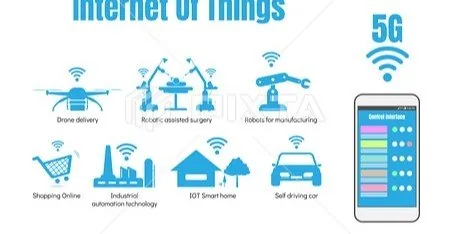
The features often cited for 5G are the following three: "ultra-high speed and high capacity," "ultra-low latency," and "massive simultaneous connections."

Simply put: communication gets faster, there's less lag, and many devices can connect at once. That's it.
2. What changes: "Everyday Life Edition"

■ Video With faster communication speeds, you'll be able to watch high-resolution video without stress. 4K and 8K video will play smoothly, and I think we'll see more and more services that let you enjoy high-definition content on the go.

■ Gaming I imagine you can guess that faster communication speeds will mean less lag and so on, so I'll skip that part. What's drawing attention is "cloud gaming." It uses a high-speed network to handle all the game processing in the cloud and transmit that information to your device so you can play. This means you won't need to buy a high-performance dedicated game console to enjoy serious games. You won't even need a PlayStation or a Switch. Cloud gaming services such as Google's "Stadia" are likely to keep spreading. I, on the other hand, am defying the times and saving up for a PlayStation 5…
3. What changes: "Business Edition"
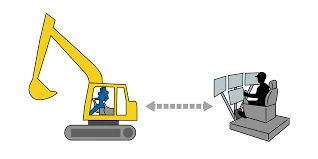
■ Construction and civil engineering sites With 5G in place, the cameras mounted on construction machinery can have higher resolution, enabling unmanned remote operation based on more precise footage. High-capacity data communication also makes it possible to display 3D video in real time. And thanks to low latency, one person can remotely operate multiple machines at once, which also leads to reduced staffing.
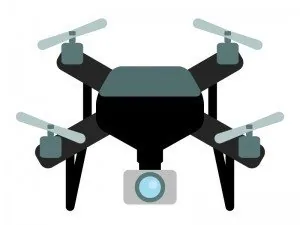
■ Agriculture Leveraging 5G's characteristic "massive simultaneous connections" and "ultra-high speed and high capacity," it becomes possible to rapidly gather large volumes of data — such as the surrounding environment, weather, and crops — from many sensors installed across farmland, and to reflect more accurate, sophisticated analysis in the management of the land and produce. It can help with harvest timing and sowing timing that used to rely on intuition. And the drones already in use can be piloted with even finer control, making possible things that couldn't be done before.
4. Finally
I've introduced just a portion here. Beyond these there are all sorts of things, like driverless taxis and surgeries performed by medical machines! Personally, I love watching sports, so I'm looking forward to the developments. DAZN, I'm counting on you. Right now, the areas where 5G is available are still limited for every carrier. Base stations are expected to increase and coverage areas to expand going forward, but… speaking of coverage, a little personal aside: I currently live in a housing complex. I'm in the leftmost row of buildings. For some reason, only my row is outside the "Uber Eats" delivery area. Why is that? Why can't they push just another 10 meters?
Thank you very much for reading this time as well!